
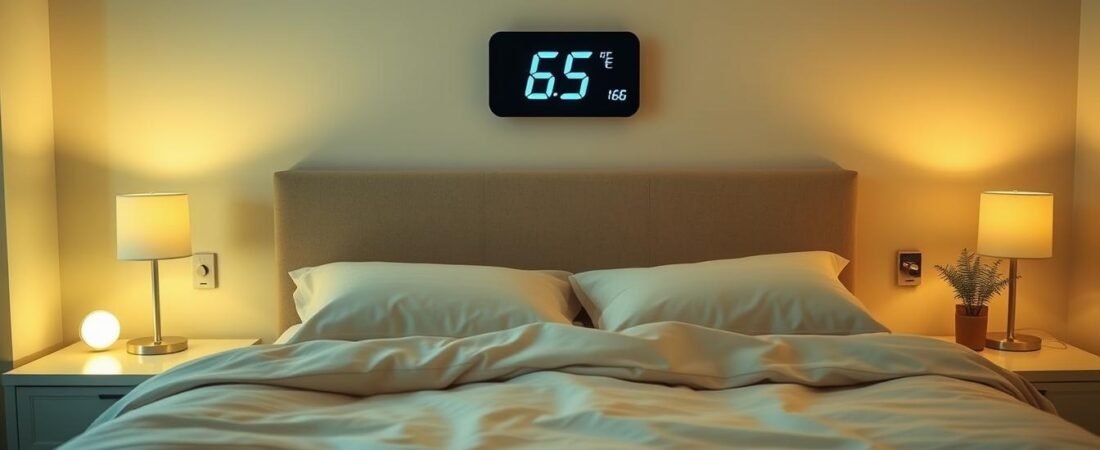
Did you know a cool bedroom can really help you sleep better? Studies show that a warm bedroom can mess up your sleep, making you tired and groggy. The ideal bedroom temperature for quality sleep is usually between 60°F to 65°F (15.6°C to 18.3°C).
But, individual preferences matter a lot, and age can change what’s best. For example, babies and older folks might need it a bit warmer. Knowing the best room temperature for sleep can make your bedroom a better place to rest, improving your sleep quality.
• The general guideline for ideal bedroom temperature is between 60°F to 65°F. • Individual preferences and age can affect the optimal bedroom temperature.
How Temperature Affects Your Sleep Cycle
Knowing how temperature affects your sleep is key for a good night’s rest. Your body’s temperature changes all day, guiding your sleep-wake cycle.
As bedtime approaches, your body temperature goes down. This drop is a natural signal to sleep. A cool room, but not cold, helps you sleep well. It matches your body’s natural cooling process.

The process of vasodilation is crucial for cooling down. When your temperature drops at night, your hands and feet might get warmer. This is because your body widens blood vessels in the skin, releasing heat. This helps you reach the perfect sleep environment temperature, essential for quality sleep.
Keeping your ideal sleep environment temperature is important. It helps you fall asleep and stay asleep. Studies show that a bedroom that’s too hot or cold can mess up your sleep cycle, leading to poor sleep.
By understanding the link between body temperature and sleep, you can make your bedroom sleep-friendly. Adjust your bedroom temperature to support your body’s natural sleep cycle.
The Ideal Bedroom Temperature for Quality Sleep
The right bedroom temperature is crucial for good sleep. For adults, the best temperature is between 60°F and 65°F. This is cool enough to help you sleep well without being too chilly.
Maintaining this temperature range can greatly improve your sleep. It helps you sleep deeper and wake up less often. It’s not just for adults; babies and seniors have their own needs too.
Babies need a warmer room, between 60°F and 68°F. This keeps them safe and comfortable, as they feel temperature changes more.
Seniors might prefer a warmer room, between 68°F to 77°F. This is because they might feel colder due to slower metabolism and circulation issues.
Adjusting the bedroom temperature is easy. You can use a thermostat or a smart system to keep it right. Also, choose breathable bedding and the right clothes to keep your body temperature steady.
Knowing and using the optimal sleep temperature can really boost your sleep. It’s good for anyone, from adults to seniors and even babies. Paying attention to your bedroom’s temperature is a simple way to improve your sleep and health.
Factors That Influence Your Optimal Sleep Temperature
Knowing what affects your sleep temperature can really help you sleep better. Your ideal sleep temperature depends on many things, including your personal and lifestyle choices.
Age is a big factor. As you age, your body gets worse at keeping a steady temperature. This can make it harder for older adults to sleep well.
Lifestyle Factors Affecting Sleep Temperature
What you do every day also affects your sleep temperature. Your diet, exercise habits, and bedtime clothes all play a part. Eating a big meal or working out too hard before bed can make it hard to sleep.
Eating right and staying active can help keep your body temperature stable at night. But, do these things early in the day. Avoid big meals and hard workouts right before bed.
| Factor | Influence on Sleep Temperature | Recommendation |
|---|---|---|
| Age | Body temperature regulation changes with age | Adjust bedroom temperature according to age-related needs |
| Diet | Heavy meals can increase body temperature | Avoid heavy meals close to bedtime |
| Exercise | Intense exercise can raise body temperature | Schedule exercise earlier in the day |
| Clothing | Thicker clothing can increase body temperature | Choose breathable, comfortable sleepwear |
By tweaking these factors, you can make your sleep space better for sleeping. This can help you sleep more soundly.
Creating and Maintaining the Perfect Sleep Environment
Creating a sleep-friendly space is more than just a comfy bed. It’s about combining several elements to improve sleep quality.
Keeping the room temperature right is key. Set your thermostat to the ideal level before bed. You can also use fans or air conditioners to cool it down.
Other important factors include the right lighting and humidity levels. Here are some tips:
- Change your bedding with the seasons for better comfort.
- Use blackout curtains or shades to control light.
- Stick to a regular sleep schedule to keep your body’s clock in sync.
By following these tips, you can make a sleep space that helps you rest well.
Transform Your Sleep Quality with the Right Temperature Tonight
Understanding the ideal bedroom temperature can change your sleep tonight. It’s key to create a sleep-friendly space. Keeping the room at the right temperature is vital for a good night’s sleep.
To get the sleep temperature right, use breathable bedding. Avoid getting too hot or cold. This small change can make a big difference in how well you sleep.
Keeping your sleep temperature just right is crucial for a good night’s rest. Follow the tips in this article to make your bedroom a place for deep sleep.
Control your sleep tonight by adjusting your bedroom temperature. The right temperature helps you wake up feeling refreshed and ready for the day.